

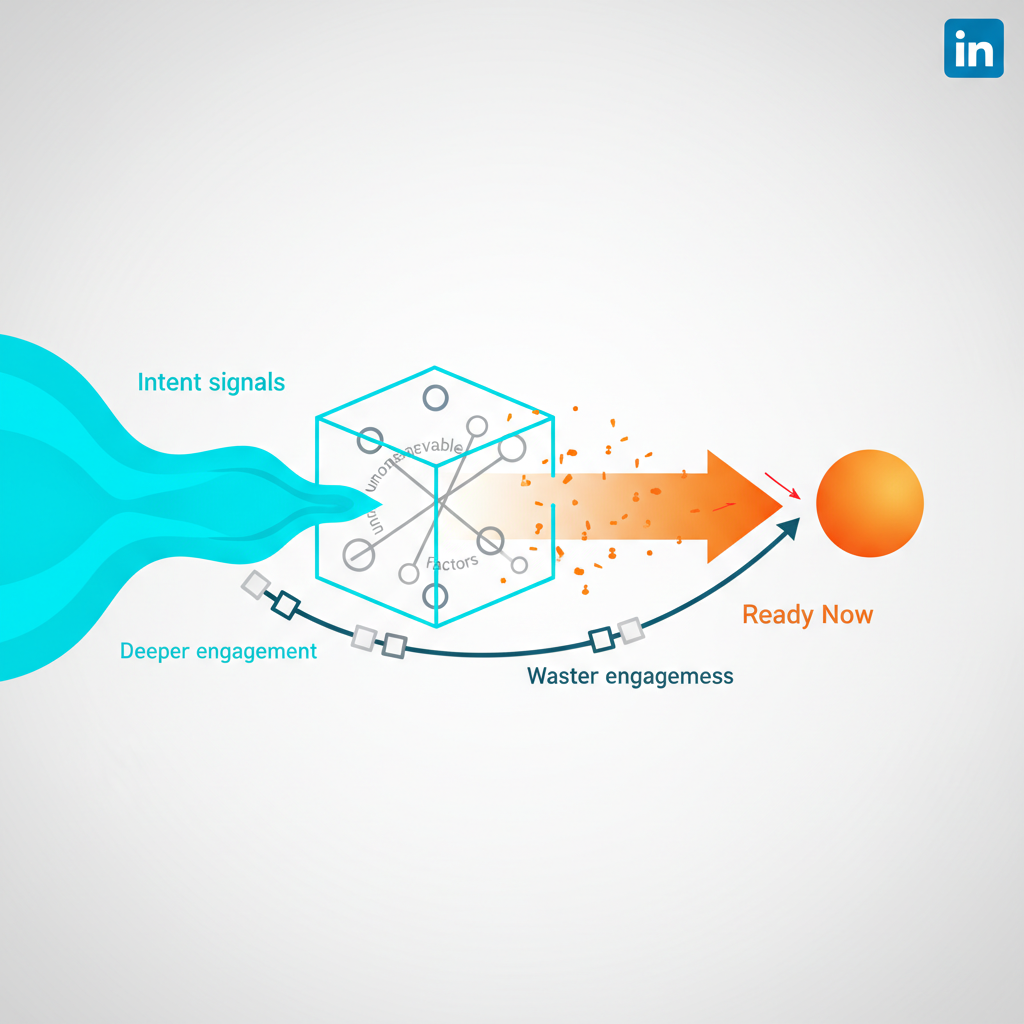
We all chase the mythical “ready now” buyer. They’re the ones seemingly primed to purchase, exhibiting telltale intent signals that light up our dashboards. But in the B2B SaaS world, are we mistaking motion for progress? Too often, we are.
The Siren Song of Uncontextualized Intent
As sales leaders, we live and die by our pipeline. We’re constantly pressured to convert leads, and we’re always looking for shortcuts. Intent data, in its raw form, promises just that. It flags companies researching our category, downloading our competitor’s white papers, or visiting our pricing page. These actions scream “buyer!” However, without understanding the internal context, these signals can be deceptive.
The Pain of Chasing Phantoms
The consequence? Sales teams waste precious time and resources chasing phantoms. Imagine a rep reaching out to a company that just downloaded a pricing comparison document. They’re excited; they see a clear buying signal. But what if that download was driven by a junior analyst tasked with preliminary research? Or what if the company is simply gathering information for a future evaluation, six months down the line? The sales rep invests time, energy, and resources in a conversation that goes nowhere, delaying actual deals and eroding team morale.
The Truth: Intent Without Context Fuels False Positives
The core problem is this: Intent signals, in isolation, offer a limited view of purchase readiness. They tell you *what* someone is doing, but not *why*. They don’t reveal the internal dynamics at play: the budget approvals, the stakeholder alignment, the perceived risks, or the internal urgency. Without understanding these factors, a sales team is flying blind, making educated guesses in a high-stakes game. They’re treating every “click” as a potential customer, rather than a data point within a complex evaluation process.
The Implication: Re-Evaluating Purchase Readiness
This isn’t to dismiss intent data entirely. It’s valuable, but it’s not a silver bullet. The implication for sales leaders is to rethink how we assess purchase readiness. We need to move beyond simply tracking intent signals and instead focus on uncovering the *context* behind those signals. This means asking better discovery questions, leveraging internal champions, and understanding the buyer’s internal narrative. How does the current problem impact their business? Why is it a priority *now*? What internal stakeholders are involved and what are their concerns?
The Real Goal: Relevant Conversations
Ultimately, the goal isn’t to identify every company that *might* buy. It’s to identify those actively evaluating solutions and to create conversations that are relevant and timely. This requires a shift from a reactive, signal-chasing approach to a proactive, context-driven one. It means moving beyond the noise of generic outreach and crafting interactions that resonate with the buyer’s current situation.
Conclusion: Seeing Beyond the Surface
In the world of B2B SaaS, the most valuable insights aren’t found in the raw data, but in the context surrounding it. Don’t be fooled by the mirage of “ready now.” True buyer readiness is revealed not by intent signals alone, but by understanding the internal dynamics, the pressing problems, and the urgency that drives a purchase decision. Only then can sales teams focus their efforts where they will make the most impact.