

The modern SaaS buying journey is a labyrinth. Buyers are armed with Google, G2, and a healthy dose of skepticism. They’re not waiting for your cold calls; they’re actively researching, building consensus, and quietly assessing their options. Meanwhile, sales teams are under the gun to close deals, filtering out the noise and prioritizing those with genuine intent. This is the stage where the account-based marketing (ABM) strategy often stumbles, focusing on the wrong target.
Myth: ABM is about targeting specific accounts.
The prevailing narrative around ABM is that you identify high-value accounts, craft personalized messaging, and relentlessly pursue those targets. The assumption is that if you get your foot in the door at the right company, the deal will follow. This approach, however, often overlooks the crucial element: the buyer’s internal state. Specifically, the buyer’s stage in their journey. Focusing on accounts without understanding their current needs and where they are in their evaluation process is a recipe for wasted effort.
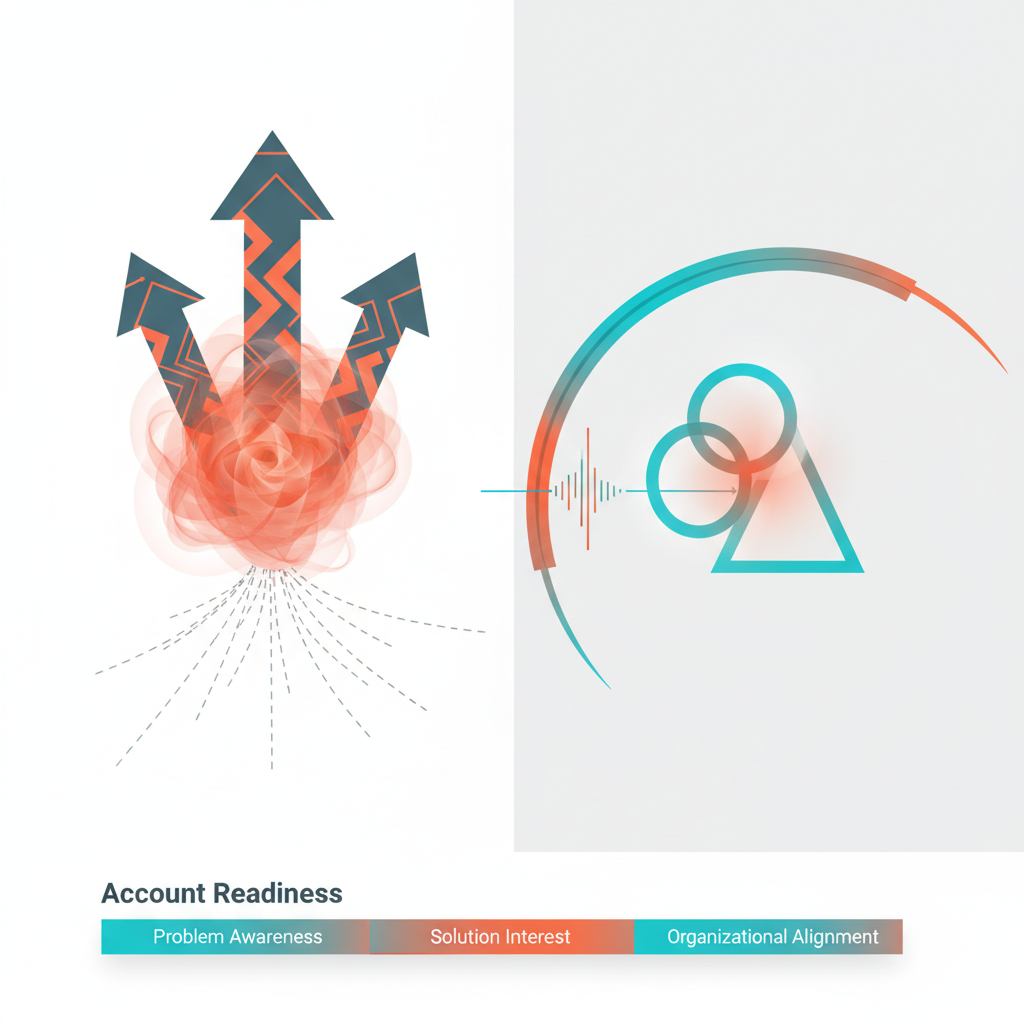
Reality: ABM should target readiness, not just accounts.
From a RevOps perspective, the most valuable ABM efforts are those that pinpoint accounts demonstrating clear signals of problem awareness. This is the crucial first step. When a potential buyer is actively looking for a solution to their problem, they’re more open to engagement. This is where demand generation can shine, but only when it reduces noise, not increases it.
The Problem-Aware Buyer’s Mindset
In the problem-aware stage, buyers are experiencing pain. They haven’t necessarily defined their solution yet, but they know something needs to change. They’re gathering information, comparing options, and building a case for investment internally. They’re also often reluctant to engage with vendors directly, preferring to remain anonymous until they’ve done their homework. This is where ABM often fails by pushing generic messaging. Instead, the focus should be on:
- Content that addresses a specific pain point. This is not about your product features; it’s about the buyer’s problem.
- Insights that highlight the risks of inaction. Help the buyer justify the need for change.
- A low-pressure, educational approach. Don’t try to sell; try to help.
The Internal Dynamics
Inside the target account, a buying committee is forming. Different stakeholders have different priorities and levels of influence. A successful ABM strategy needs to consider these internal dynamics. Instead of blasting the entire company with generic messaging, you need to understand who is involved and their concerns. This requires:
- Identifying key decision-makers and influencers. LinkedIn can be a good source of information.
- Understanding the internal politics and power dynamics. Who are the champions? Who are the blockers?
- Tailoring messaging to resonate with each stakeholder’s specific needs. The CFO cares about ROI. The end-user cares about ease of use.
Risk and the Need for Speed
Buyers in the problem-aware stage are also assessing risk. They’re evaluating vendors, and internally, they are also assessing the risks of switching or making a wrong choice. They want to avoid a costly mistake. If your outreach isn’t tailored to their specific problem and readiness, they’ll disengage. This is where the sales process can stall, and where ABM can backfire. Buyers will quickly identify generic, self-serving marketing and move on.
The RevOps Imperative
For RevOps leaders, the focus is always on efficiency and effectiveness. ABM, when done right, can be a powerful tool. But it needs to be grounded in data, buyer behavior, and a deep understanding of the sales process. Don’t just target accounts; target readiness. Identify those that are actively seeking a solution, and then provide the information they need to move forward. This approach reduces wasted effort, increases conversion rates, and accelerates the sales cycle.
Conclusion
Traditional ABM often gets it backward. It prioritizes the account over the buyer’s readiness to engage. In the problem-aware stage, the key to success is understanding your target’s pain points, internal dynamics, and risk tolerance. By focusing on readiness, not just the account, you can create ABM campaigns that are truly relevant, valuable, and ultimately, effective. This is how you generate demand that actually converts.