

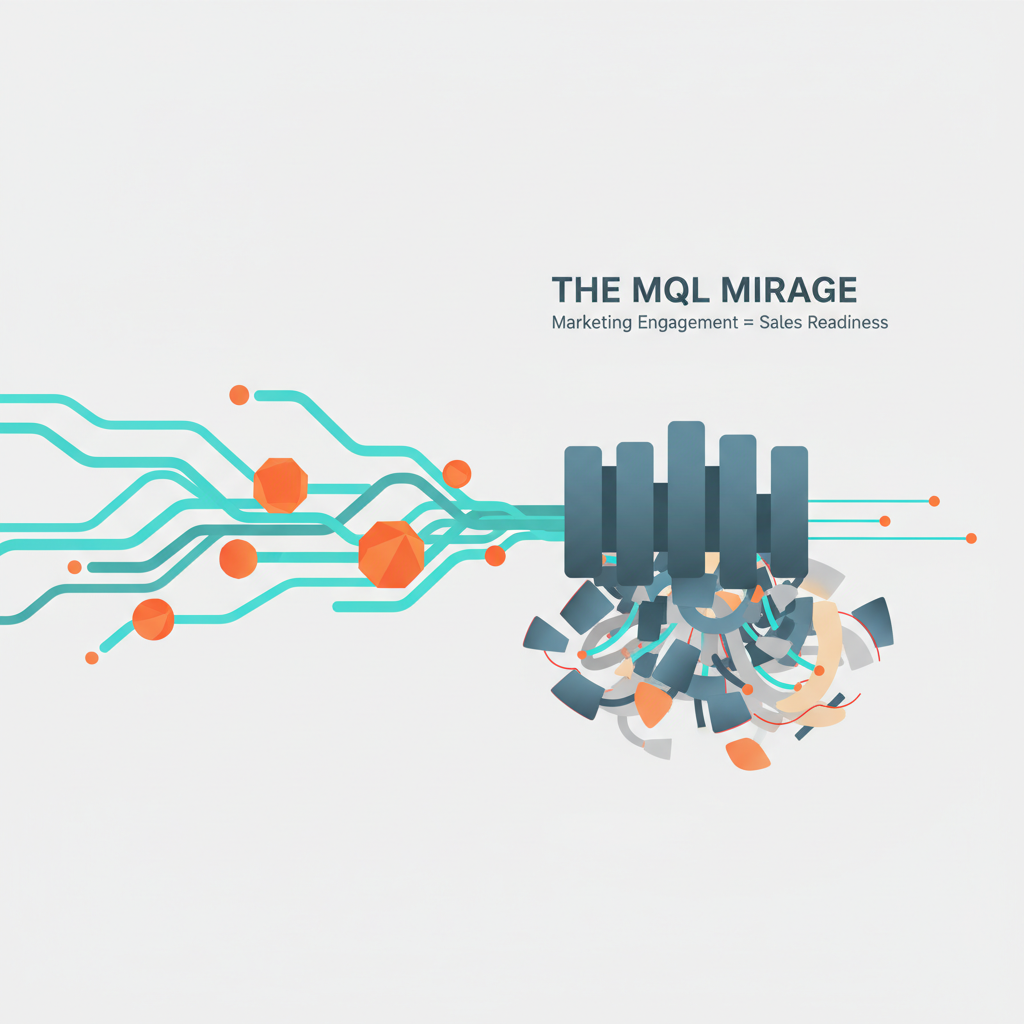
The MQL. That coveted badge of marketing qualification. It signals a prospect has engaged with your content, downloaded a resource, or maybe even attended a webinar. In the frantic world of B2B SaaS, the MQL is often seen as gold. But what happens when sales teams routinely ignore these “golden” opportunities? The truth is, the very definition of a “good” lead is often misaligned with how modern buyers actually behave.
The Observed Pattern: MQLs Left to Languish
I’ve witnessed this countless times. A marketing team meticulously nurtures a lead through a series of content touchpoints. They score the prospect based on engagement, demographics, and perceived fit. Finally, the lead crosses the MQL threshold, triggering an automated handoff to sales. Then…crickets. Or, at best, a lukewarm email and a voicemail that goes unanswered. Sales reps, buried under a mountain of leads, cherry-pick the “low-hanging fruit” – those with the clearest buying signals, the most obvious pain points, and the most immediate need. The MQLs, often problem-unaware buyers exploring their options, get lost in the shuffle.
Why It Fails: The Incomplete Story of Intent
The problem isn’t necessarily the quality of the lead itself; it’s the incomplete story it tells. MQLs are often based on activity – content downloads, website visits, form submissions. These actions provide glimpses into a buyer’s interests, but they rarely reveal the *context* behind those interests. Modern SaaS buyers are problem-unaware. They’re researching, educating themselves, and building internal consensus. They may be downloading your ebook on “The Future of AI in Sales” but they haven’t yet realized *their* sales process is broken. Without this critical context, the sales rep is left guessing, which dramatically increases the risk of a wasted conversation.
Think about it from the sales rep’s perspective. They’re under pressure to close deals. They have limited time and a quota to hit. They need to prioritize conversations that are likely to convert. A generic MQL, lacking the specifics of a buyer’s current challenges or internal dynamics, is a gamble. It requires the rep to spend valuable time qualifying the lead and uncovering the buyer’s needs before they can even begin to pitch. This is a losing proposition.
What Changes Outcomes: Framing the Conversation, Not Just the Lead
The key to unlocking the true potential of MQLs lies in shifting the focus from lead volume to intent interpretation. Instead of simply generating more leads, demand generation needs to provide sales with the *context* they need to engage in meaningful conversations. This means:
- Deepening Buyer Understanding: Instead of just tracking clicks and downloads, focus on identifying the specific problems your target audience is trying to solve. What are their pain points? What are they researching? What are their internal challenges?
- Building Intent Signals: Develop content and lead capture strategies that reveal a buyer’s problem awareness and internal context. This could include targeted surveys, interactive assessments, or content that directly addresses specific challenges.
- Providing Context to Sales: Equip sales with the insights they need to understand the buyer’s journey stage. Arm them with information about the buyer’s industry, company size, and previous interactions with your content. Give them talking points and suggested questions that are relevant to the buyer’s specific needs.
When sales reps understand the buyer’s problem, internal context, and journey stage, they can tailor their outreach accordingly. They can position themselves as a helpful resource, offering solutions and insights that are relevant to the buyer’s current challenges. This approach reduces friction, increases engagement, and ultimately, accelerates the sales cycle.
Conclusion: Beyond the MQL
The MQL is not a magic bullet. It’s a starting point. To truly generate valuable leads, we need to move beyond simply generating more of them. We need to focus on understanding buyer intent, uncovering internal context, and providing sales with the information they need to have meaningful, relevant conversations. Only then can we transform the MQL from a source of frustration into a catalyst for growth.