

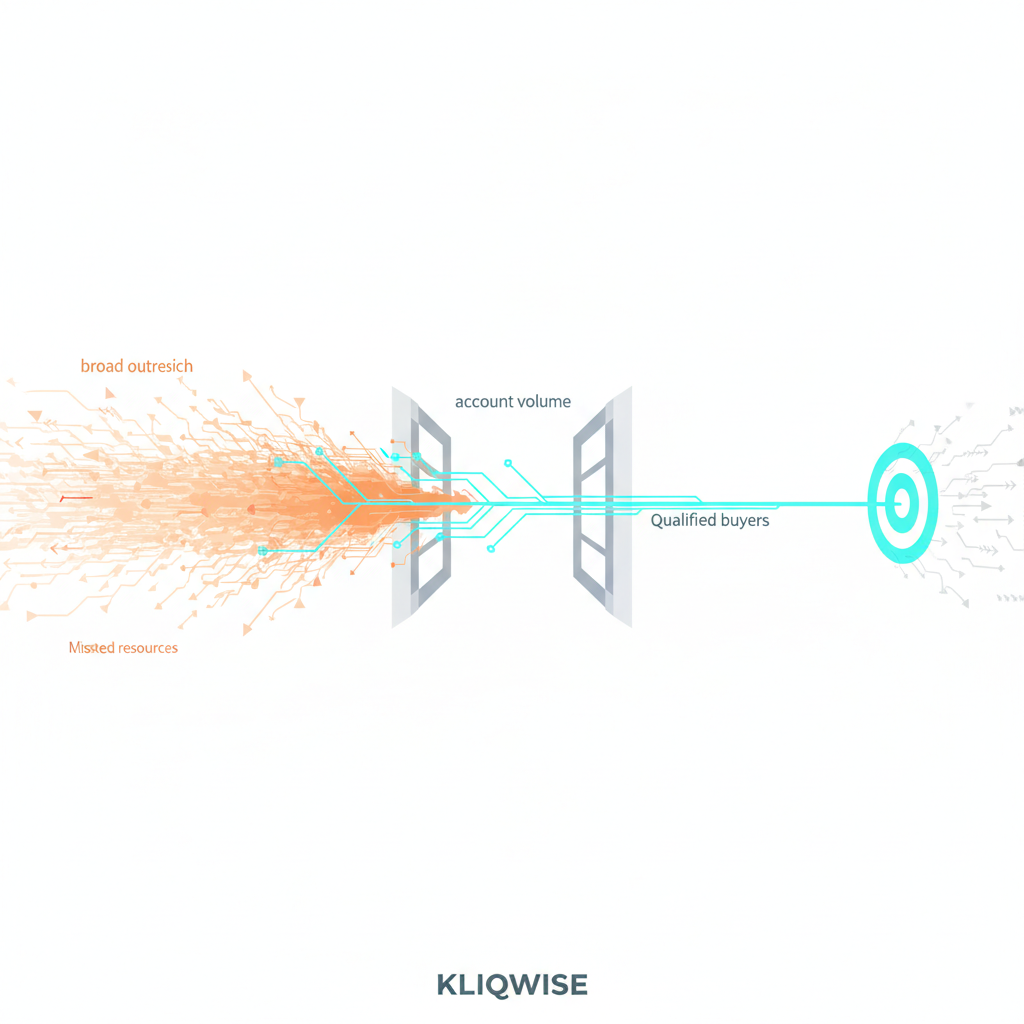
The relentless pursuit of pipeline – the lifeblood of any SaaS business – often leads to a myopic focus on volume. We push, we blast, we hope. But in the complex world of B2B SaaS, where buyers are savvy and internal decision-making is a tangled web, this approach frequently backfires. The disconnect between what buyers expect and what sellers deliver is stark, and it’s a critical problem that ABM, in its current form, often exacerbates.
What Buyers Expect: Relevance, Not Just Recognition
Modern SaaS buyers are self-directed. They research, they compare, and they involve a multitude of stakeholders. They’re not waiting for a sales pitch; they’re actively seeking solutions to specific, well-defined problems. They’re solution-aware – they know there are options, and they’re evaluating. They want contextually relevant information that addresses their immediate needs and aligns with their internal priorities. They are wary of generic outreach that doesn’t acknowledge their specific circumstances or demonstrate an understanding of their challenges. Generic, untargeted ABM campaigns, even if they reach the “right” account, often fall flat because they lack this crucial relevance.
Consider a buyer exploring a new CRM system. They are not simply looking for “a CRM.” They are assessing the pain of their current system, its shortcomings, and how they can be overcome. They’re weighing the internal political landscape, the ease of adoption, and the impact on their team’s productivity. A well-crafted ABM campaign, in theory, should speak directly to these concerns. However, if it’s focused solely on the account and not on the buyer’s *readiness* to engage, it’s just another piece of noise in an already crowded inbox.
What Sellers Do: Chasing Volume, Missing Signals
The pressure to fill the pipeline is intense. Sales teams, facing quota deadlines, often default to tactics that prioritize quantity over quality. Leads are scrutinized, and low-context interactions are dismissed. The focus shifts to identifying “qualified” leads – those who show immediate buying signals – rather than nurturing genuine interest. This leads to a frantic scramble to find the “low-hanging fruit,” often at the expense of longer-term opportunities.
This is where the ABM strategy often falters. While it targets specific accounts, it frequently fails to assess the *readiness* of individuals within those accounts. Campaigns are deployed based on account-level data (industry, size, etc.) rather than on behavioral signals that indicate genuine interest and internal momentum. The result? A flood of generic content that gets ignored, a wasted opportunity to engage with a buyer who might be on the cusp of a decision, and ultimately, a pipeline filled with low-quality leads.
The core problem? ABM often targets *accounts*, but buyers make decisions. And buyers are ready at different times. The best ABM will follow the individuals in the account and their readiness to buy.
The Kliqwise Point of View: Focusing on Intent and Context
The key to effective demand generation is to reduce noise, not add to it. It’s about understanding the buyer’s internal context, their journey stage, and their specific needs. It’s about recognizing the subtle signals that indicate readiness – the content they consume, the interactions they have, and the problems they’re actively trying to solve. By focusing on intent, we can engage buyers when the conversation is actually relevant, leading to higher-quality leads and a more efficient sales process.
This approach requires a shift in mindset. It means moving beyond account-level targeting and focusing on the individual buyer and their demonstrated intent. It means investing in tools and processes that provide deep insights into buyer behavior and internal dynamics. And it means empowering sales teams to engage in meaningful conversations that address specific needs and challenges.
Conclusion: The Path to a High-Quality Pipeline
Building a high-quality pipeline isn’t about casting a wide net. It’s about understanding your buyers, their needs, and their journey. It’s about aligning your outreach with their internal context and providing value at every stage. ABM can be a powerful tool, but it fails when it’s focused on the account, not the individual’s readiness to engage. The most effective demand generation strategies are built on a foundation of buyer understanding, intent interpretation, and a commitment to delivering relevance, not just recognition.