




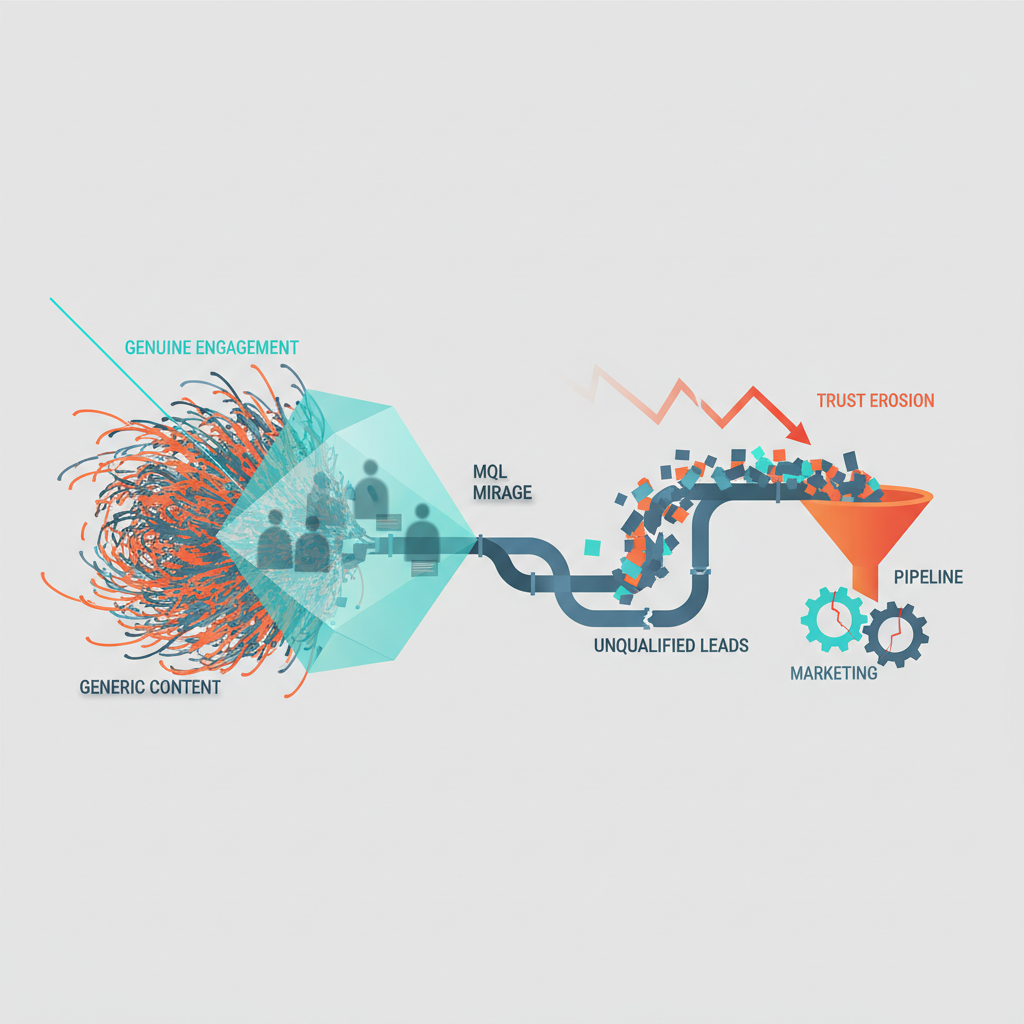
In the high-stakes world of B2B SaaS, the relentless pursuit of MQLs has become a siren song. We’re told that more leads equal more opportunities, and more opportunities translate into more revenue. But as a sales leader, I’ve seen firsthand how this relentless focus can backfire. The reality is, a flood of low-context MQLs can actually damage pipeline health and erode the trust between sales and marketing, especially when ABM initiatives are misaligned with how modern buyers operate.
Myth: High MQL Volume Fuels the Pipeline
The conventional wisdom is clear: the more leads you pump into the system, the more potential customers you’ll capture. ABM, with its promise of targeted outreach, is often seen as the perfect engine for generating these valuable MQLs. The assumption is that quantity will eventually lead to quality, and that sales teams can sort through the noise to find the gems.
Reality: Buyer Behavior is About Self-Service & Internal Alignment
The truth is far more complex. Today’s SaaS buyers are sophisticated. They conduct their own research, consume content, and build consensus internally *before* engaging with a vendor. They don’t want to be “sold to”; they want to solve a problem. They’re wary of pushy sales tactics and are quick to disengage if the outreach doesn’t feel relevant to their current needs and internal discussions. This is particularly true in ABM scenarios, where the promise of personalized messaging often falls flat. Generic, high-volume outreach, even when targeted, can be perceived as irrelevant and time-wasting, leading to a breakdown in trust before a sales conversation even begins.
The Internal Consensus Hurdle: A Missed Opportunity
A key aspect of the modern SaaS buying journey is the internal consensus-building phase. Buyers need to justify their decisions to multiple stakeholders, from budget holders to technical teams. This process is rarely linear and often involves extensive internal debate, research, and evaluation. When a barrage of generic MQLs hits a buyer during this critical phase, it’s often seen as a distraction, not an asset. Sales reps, armed with low-context information, struggle to understand the internal dynamics at play and often fail to provide the tailored insights needed to move the deal forward.
The Trust Tax: How High-Volume Hurts Sales
When sales teams are inundated with low-quality MQLs, it creates a crisis of trust. Reps become skeptical, focusing their efforts on the “sure things” and de-prioritizing leads that require more effort. This not only slows down the sales cycle but also creates friction between sales and marketing. Sales teams might start ignoring MQLs altogether, or worse, they may begin to discount the value of marketing-generated leads, leading to a misallocation of resources and missed opportunities. It also creates a culture where the goal is quantity over quality, incentivizing the wrong behaviors.
Shifting the Focus: Quality Over Quantity
The key to successful ABM, and indeed all demand generation efforts, is to shift the focus from volume to *relevance*. Instead of simply generating more MQLs, we need to understand the buyer’s internal context, their stage in the buying journey, and the specific challenges they’re facing. This means investing in deeper research, creating highly targeted content, and ensuring that sales and marketing are aligned on a shared understanding of buyer intent and readiness. The goal isn’t just to fill the pipeline; it’s to fill it with *qualified* opportunities that are more likely to convert. This requires a much more nuanced approach to demand generation, one that prioritizes understanding buyer behavior and internal dynamics.
Conclusion: Rethinking the MQL Mindset
The pursuit of high MQL volume, especially in ABM, can be a dangerous game. It can erode pipeline trust, create friction between sales and marketing, and ultimately hinder revenue growth. By focusing on understanding the buyer’s internal context, tailoring outreach to their specific needs, and prioritizing quality over quantity, we can create a demand generation engine that truly drives value. Only then can we ensure that our efforts are not just generating leads, but fostering meaningful conversations that lead to closed deals.