

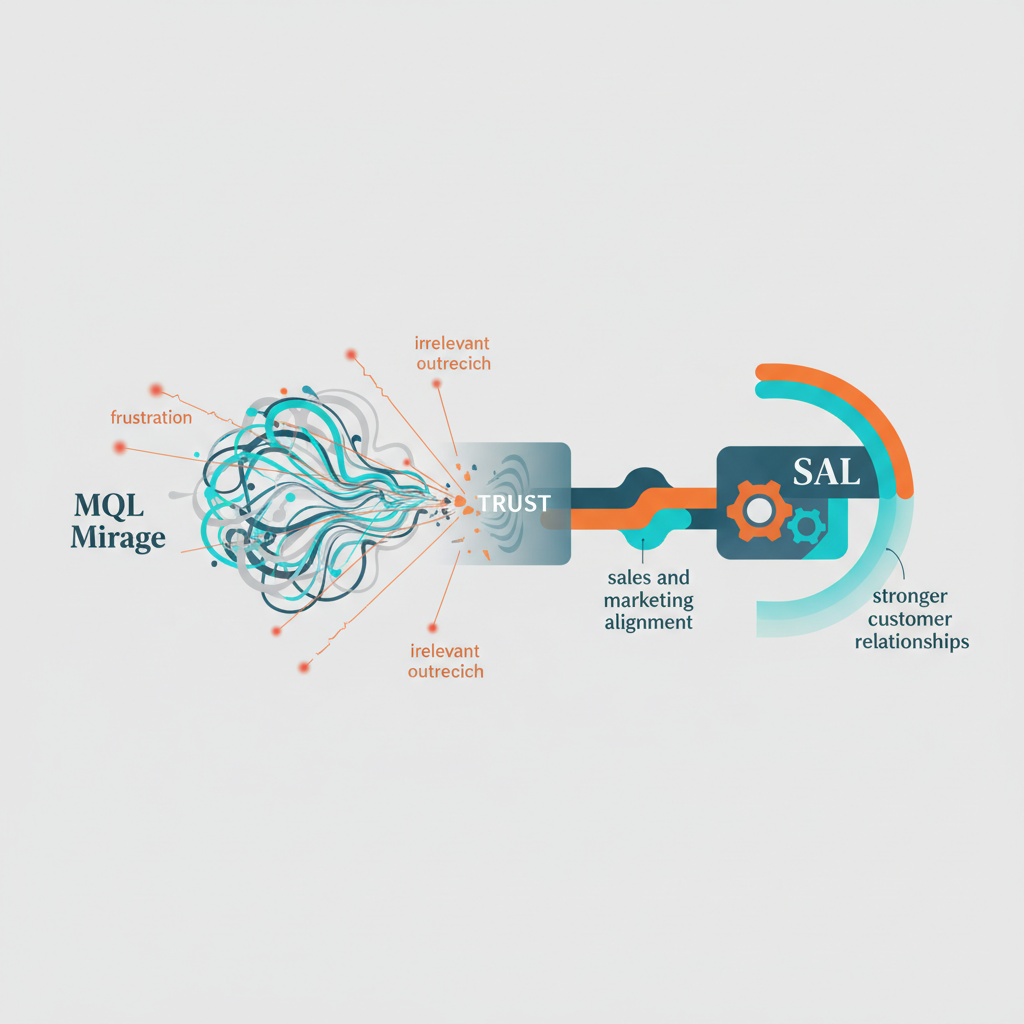
The SaaS sales machine grinds on, fueled by the relentless pursuit of MQLs. But what if the very metrics we use to measure success are actively sabotaging our ability to connect with buyers? We’re operating under the illusion of progress, chasing activity proxies while buyer trust erodes, leaving deals stalled and sales teams frustrated. This isn’t just a matter of wasted effort; it’s a fundamental misunderstanding of how modern SaaS buyers navigate their journey.
The Counterintuitive Truth: Activity Doesn’t Equal Intent
We’ve been conditioned to equate volume with velocity. More MQLs, more opportunities, more revenue. But the reality is far more nuanced. Consider the problem-aware buyer. They’re actively researching solutions, gathering information, and building consensus within their organization. They’re not necessarily raising their hand to a sales call just because they downloaded a whitepaper or attended a webinar. These actions are often expressions of curiosity, not commitment. Treating them as such creates a deluge of irrelevant outreach, undermining the buyer’s self-directed research and, ultimately, eroding their trust in your ability to understand their needs.
Evidence from the Trenches: The Stalled Deal Phenomenon
Observe the behavior of your sales teams. How often do they dismiss leads as “tire kickers” or “not serious”? How many deals get stuck in the early stages, languishing in “evaluation” for months? This isn’t a failure of sales execution; it’s a symptom of a flawed system. The sales team, under pressure to close deals, quickly identifies the low-context MQLs as a waste of time. They are incentivized to chase the “hot” leads, those who signal clear intent, often leaving the “warm” leads to cool off or disappear entirely. This is because the MQL, in many cases, is a poor indicator of genuine buying intent. The buyer is researching and evaluating, but the vendor is pushing for a conversation too early, before the buyer has internally validated the need, built consensus, and understood the available solutions.
Consider the internal dynamics of a buying committee. Different stakeholders have different priorities and levels of awareness. A marketing lead downloads your ebook, but the IT director is concerned about integration. The VP of Finance is worried about budget. Your sales team, armed with an MQL, is likely to focus on the marketing lead, while the real decision-making process is happening elsewhere. The sales team is not equipped to navigate the complex internal dynamics of the buyer’s organization. The result: stalled deals and frustrated sales reps.
Practical Reframing: Shifting from Activity to Intent
The solution isn’t to abandon MQLs entirely. Instead, it’s about re-evaluating the signals you’re using to define them and how you engage with them. Your focus should shift from activity to intent. This means:
- Rethink Your Lead Scoring: Don’t just count downloads and clicks. Analyze the content buyers consume, the pages they visit, and the patterns of their engagement. Are they exploring pricing? Are they comparing features? Are they researching competitors?
- Contextualize Your Outreach: Tailor your messaging to the buyer’s specific journey stage and the problems they’re actively trying to solve. Generic pitches are a trust-killer. Focus on providing value and answering their questions, not pushing for a demo.
- Empower Your Sales Team: Equip your sales team with the tools and insights to understand the buyer’s internal context. Help them identify key stakeholders, understand their priorities, and navigate the decision-making process.
- Embrace the Power of “No”: Sometimes, the best outcome is to politely disengage. If a buyer isn’t ready to talk, don’t force it. Provide valuable resources and nurture the relationship, allowing them to engage when they’re ready.
By focusing on intent, you reduce the noise, improve the quality of your conversations, and build trust with buyers. This will lead to more efficient sales cycles, higher close rates, and ultimately, more revenue.
Conclusion: Building a Trust-Based Demand Generation Engine
The MQL is not inherently bad. But relying on it as a primary indicator of progress is. We must move beyond activity proxies and understand the nuanced realities of the modern SaaS buyer. By shifting our focus from volume to intent, we can build a demand generation engine that reduces noise, provides value, and earns the trust of our buyers. This is not just a tactical adjustment; it’s a fundamental shift in how we approach the market, and it’s the key to driving sustainable growth.