

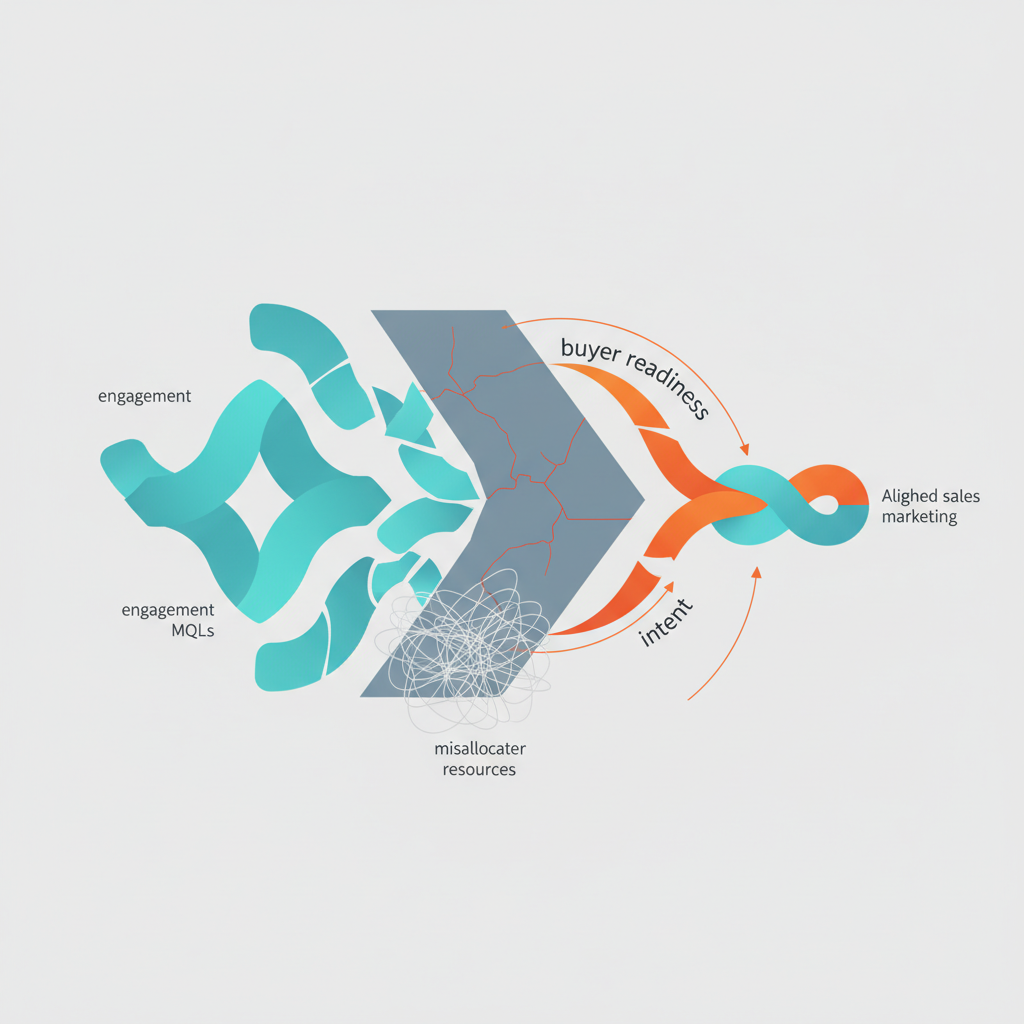
Deals stall during vendor evaluation because sales teams misinterpret buyer signals and fail to recognize internal decision friction. The core issue isn’t a lack of data; it’s a misreading of the data available and a failure to proactively address the underlying reasons for buyer hesitation. From a sales leadership perspective, understanding this nuanced reality is critical to navigating the complexities of modern B2B SaaS sales cycles.
Most GTM failures stem from misaligned interpretation, not a lack of data. Sales teams often rely on surface-level indicators, leading to an overestimation of deal velocity and a failure to anticipate the internal dynamics that can derail a deal.
The Problem: Misinterpreting Buyer Signals
The modern SaaS buyer is a master of self-education. They research vendors extensively, often delaying direct interaction with sales until late in the evaluation process. This means that traditional buying signals – a request for a demo, a pricing inquiry – are often misinterpreted as signs of immediate readiness. They might be just as likely to be part of a broader fact-finding mission.
This misinterpretation leads to several negative outcomes:
- Premature Sales Engagement: Sales reps engage too early, pushing product features instead of understanding the buyer’s actual pain points and internal challenges.
- Ignoring Internal Dynamics: Sales teams often fail to identify and engage with all relevant stakeholders, leaving key decision-makers unaddressed.
- Focusing on the Wrong Metrics: Sales teams prioritize activities that generate short-term signals (e.g., demo attendance) rather than focusing on building long-term relationships and trust.
The Reality: Internal Risk and Decision Friction
The vendor evaluation phase is fraught with internal risk. Buyers are evaluating not just the product, but also the vendor’s ability to deliver, integrate, and support the solution. The internal champion faces pressure to justify the investment and mitigate the risk associated with a new technology or vendor.
The failure to recognize and address this internal risk is a primary reason for deal stalling. The sales team might be perceived as not understanding the internal evaluation process, which is often more complex than a simple product assessment. This can manifest as:
- Lack of Internal Alignment: The sales team fails to provide the necessary information to help the buyer build consensus internally.
- Unaddressed Concerns: The sales team ignores or downplays the buyer’s concerns about implementation, integration, or ongoing support.
- Poor Risk Mitigation: The sales team fails to address the buyer’s concerns about the potential risks associated with the new vendor, leading to a breakdown in trust.
The result? Stalled deals, extended sales cycles, and lost opportunities.
What Teams Miss: Proactive Relationship Building and Internal Understanding
What sales teams often miss is the importance of proactive relationship building and understanding the buyer’s internal landscape. This means:
- Focusing on the “Why”: Understanding the buyer’s underlying business challenges and goals, not just the product requirements.
- Identifying and Engaging Stakeholders: Actively identifying and engaging with all key decision-makers and influencers.
- Providing Value Beyond the Product: Offering insights, expertise, and resources that help the buyer build consensus and mitigate internal risk.
By shifting the focus from product features to the buyer’s internal evaluation process, sales teams can proactively address the underlying reasons for deal stalling and increase their chances of success. It’s about helping the buyer navigate their internal challenges, not just selling them a product.
Kliqwise observes these real buying behaviors across B2B SaaS GTM motions.