
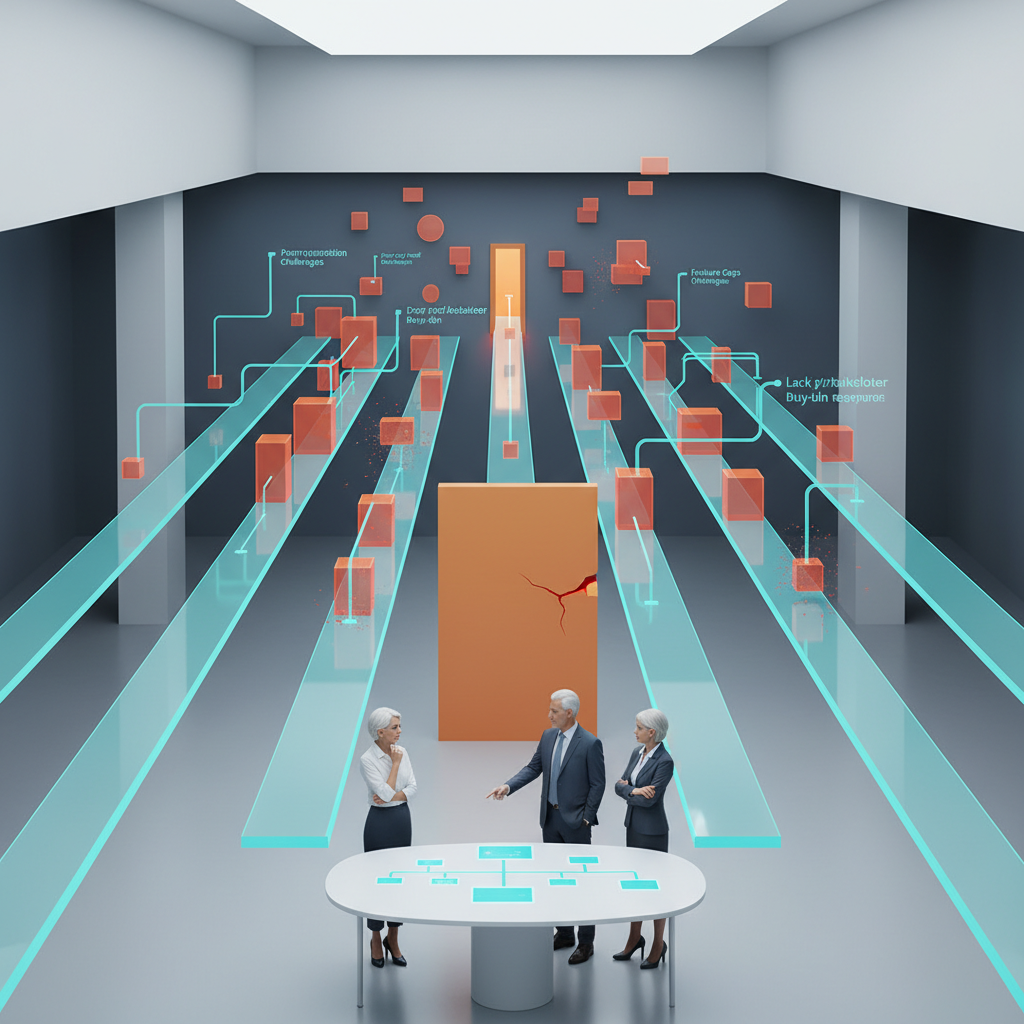
Vendor evaluations stall after the demo because of misaligned interpretations of “progress” between the buying committee and the sales team. The demo is often viewed as a milestone, but it’s frequently a starting point for deeper internal scrutiny, not a green light for immediate purchase. Many deals get stuck because the sales process assumes alignment that doesn’t exist, leading to a cascade of internal challenges. This misalignment is driven by a lack of understanding of the buyer’s internal risk management and evaluation processes.
The common assumption is that a successful demo directly correlates with a faster path to close. However, this perception fails to account for the internal dynamics of a SaaS buying committee, which often includes stakeholders with varying priorities, budget constraints, and risk tolerances. The demo itself is just one data point, and it’s frequently followed by a period of internal debate and due diligence.
Why This Fails in Practice
The primary reason SaaS vendor evaluations stall is the disconnect between the seller’s perception of progress and the buyer’s internal realities. Sales teams, under pressure to close deals, often push for next steps immediately after the demo, assuming the buyer is as eager to move forward as they are. This pressure can backfire, as it fails to acknowledge the internal friction within the buying committee.
Consider these common failure modes:
- Unrealistic timelines: Sales teams set aggressive timelines based on their sales cycles, which don’t align with the buyer’s internal risk assessment process.
- Insufficient stakeholder alignment: Demos are often presented to a single champion, but the final decision requires consensus. Without a clear understanding of the full buying committee, the sales team can’t address all concerns.
- Ignoring internal risk management: SaaS purchases involve substantial internal risk. Buyers need to justify the investment to their superiors. Failure to understand these internal pressures will stall the deal.
These issues are compounded by the modern buyer’s self-education habits. Buyers often delay vendor interaction, preferring to research and evaluate options independently. A premature push for a close, without addressing the buyer’s internal needs, can lead to disengagement and stalled evaluations.
What Teams Miss
Sales and marketing teams often miss the critical steps that happen *after* the demo. They focus on the perceived “win” of the demo, but neglect the critical post-demo phase, where the real work of internal evaluation begins. This includes building internal consensus, justifying the purchase to budget holders, and mitigating perceived risks.
Here’s what teams frequently overlook:
- Internal Champion’s Limited Influence: The primary contact is often not the ultimate decision-maker, and their internal influence may be limited.
- Lack of a clear value proposition for *all* stakeholders: The demo may resonate with one user, but not with finance, legal, or IT, who each have different evaluation criteria.
- Insufficient resources for internal buy-in: Sales teams rarely provide the buyer with the materials, support, and context they need to sell internally.
These omissions highlight a fundamental misunderstanding of the buyer’s journey. Buyers, especially in B2B SaaS, are not simply looking for a product. They are looking for a solution that solves a specific problem and mitigates internal risks. Understanding these internal dynamics is crucial to navigating the post-demo phase successfully.
As an operator-led demand generation and lead generation firm, Kliqwise observes these patterns daily, seeing how misaligned expectations and a lack of understanding about internal processes can derail even the most promising deals.