

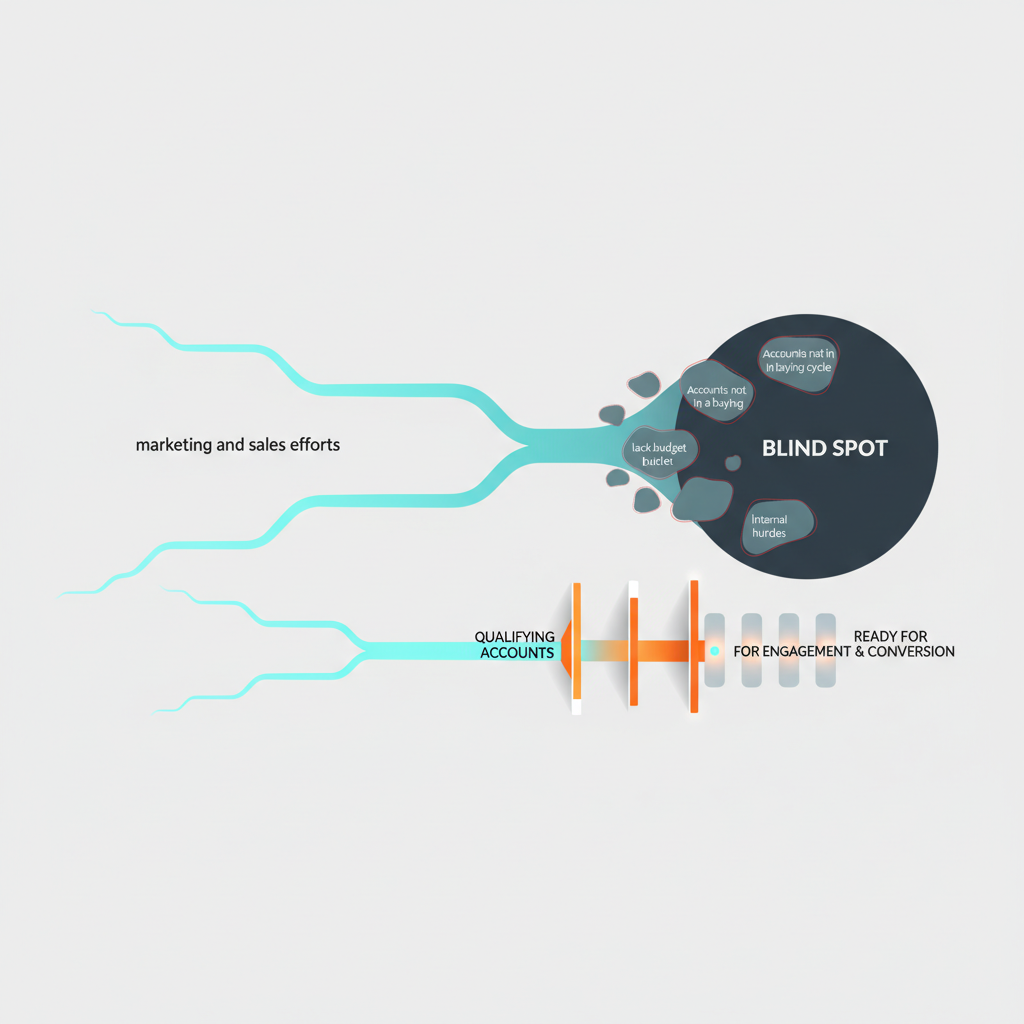
The modern SaaS buying journey is a masterclass in self-service, internal debate, and vendor avoidance. Buyers are drowning in information, and their default setting is “ignore.” Sales teams, meanwhile, are tasked with hitting quotas, which means they are rightfully skeptical of anything that isn’t a clear signal of intent. This creates a fundamental misalignment, a tension point where Account-Based Marketing (ABM) often stumbles: It targets accounts, not the actual readiness of the individuals within them.
The Observed Pattern: Account Focus, Readiness Blindness
We see it constantly. ABM campaigns meticulously craft personalized messaging, deploy targeted ads, and bombard key accounts with content. The focus is on the *account* – its industry, its size, its perceived pain points. But what’s often missing is a granular understanding of individual *readiness*. Are the key stakeholders within that account actively exploring solutions? Are they aware of the problem, let alone the potential value of a solution like yours? Or are they just… there? Without this micro-level insight, ABM becomes a shotgun approach, hoping to hit something, anything, within the target account.
Why It Fails: The Internal Evaluation Labyrinth
This account-centric approach fails because it ignores the complexity of internal decision-making. SaaS purchases are rarely a solo act. They involve committees, budget approvals, and a risk assessment process. The “champion” you’re targeting might be a mid-level manager with limited influence, or a decision maker who is only just starting to understand the challenges your product solves. Without understanding the internal context, your well-crafted ABM campaign is a message in a bottle tossed into a churning sea. It’s easy for the buyer to say “not now” or “not us.” The sales team feels the friction: They’re handed leads that look good on paper, but lack any real buying signals. The deal stalls, the pipeline stagnates, and the pressure mounts.
What Changes Outcomes: Uncovering the Pre-Problem Stage
The key to unlocking ABM’s potential lies in shifting the focus from account-level targeting to *readiness-based engagement*. This means understanding the buyer’s journey at its most nascent stage – the “problem unaware” phase. This is where buyers are experiencing pain, but haven’t yet articulated the problem or are actively searching for solutions. They’re gathering information, comparing options, and building consensus internally. This phase is where true value can be added, and where ABM can really shine.
Uncovering Intent Through Insight
Instead of focusing on account demographics, prioritize identifying signals of intent. Are they downloading specific content? Visiting relevant pages on your website? Engaging with industry thought leaders? These are the clues. This requires a shift in mindset. It means focusing less on broad account coverage and more on identifying the individuals who are actively investigating solutions. It means being there when the buyer is ready to start their research, not when they’re already halfway through the process.
Building Relevance, Not Just Recognition
Once you’ve identified intent, the focus shifts to providing value. Craft content that addresses the buyer’s pain points, educates them on the problem, and guides them toward a solution. This is about building trust and establishing thought leadership, not just gaining brand recognition. The goal is to be a resource, not a nuisance. This approach ensures that when sales does engage, the conversation is already framed with relevance and an understanding of the internal context.
Conclusion: From Account Targets to Readiness Signals
ABM, in its purest form, is a powerful strategy. But it’s often hamstrung by its focus on account-level targeting. The real opportunity lies in understanding buyer intent and aligning with their readiness. By shifting the focus from account demographics to individual signals of interest, RevOps teams can create a more effective, and a much less noisy, demand generation machine. The goal is not just to reach the right accounts, but to engage with the right people, at the right time, with the right message. That’s where ABM truly generates results.