

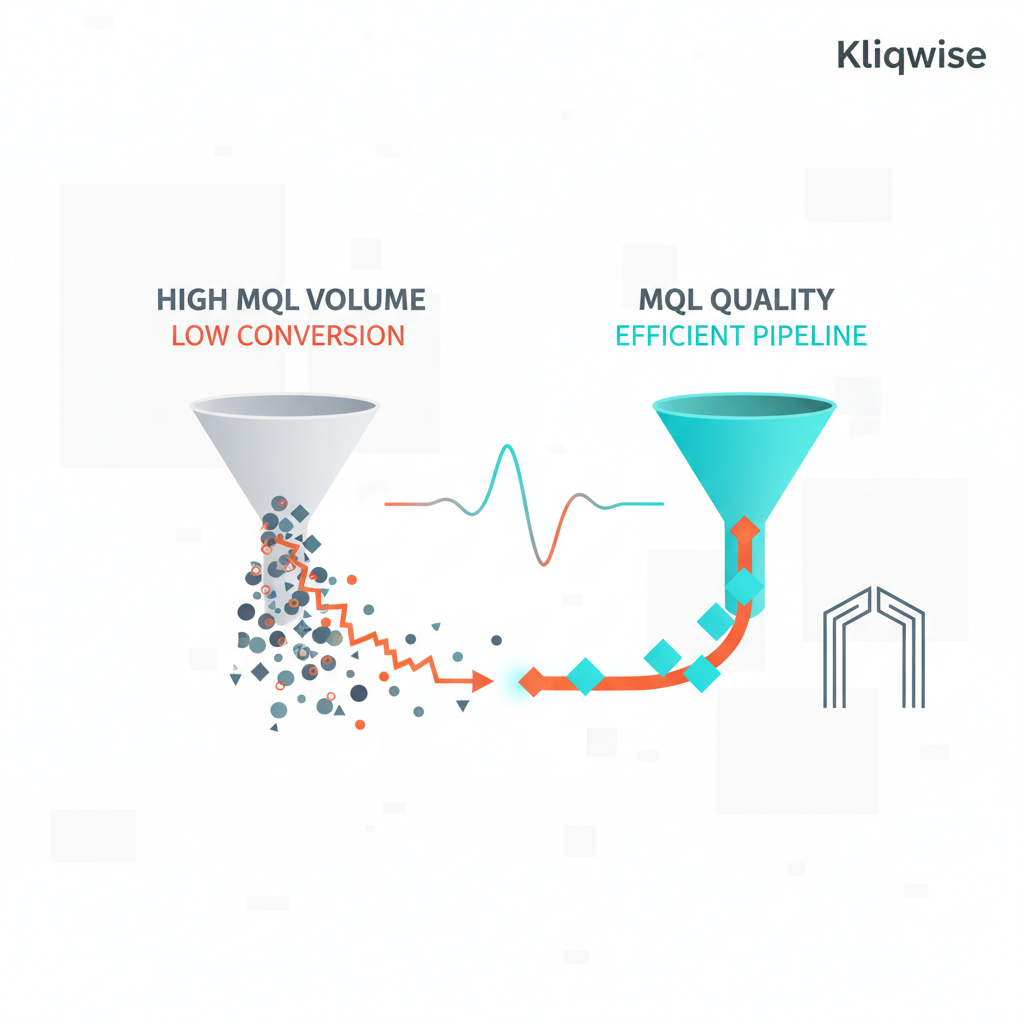
The modern SaaS buying journey is a labyrinth. Buyers are empowered, self-directed, and armed with information. They’re not waiting for your cold calls; they’re researching, debating internally, and quietly evaluating solutions. Meanwhile, sales teams are under the gun, desperate to separate the wheat from the chaff. This creates a dangerous disconnect, and nowhere is this more apparent than in the relentless pursuit of Marketing Qualified Leads (MQLs).
What Buyers Expect: Relevance and Insight
Buyers in the “solution aware” stage have a problem, they know they need help. They’re actively searching for solutions, consuming content, and comparing vendors. Their focus is on understanding how different approaches might solve their specific pain points. They expect vendors to demonstrate deep understanding of their industry, the challenges they face, and a clear path to value. Generic outreach, irrelevant content, and a lack of understanding are instant deal-killers.
Buyers are also highly skeptical of sales pitches that arrive too early or are simply off-target. They’re looking for partners, not pushy salespeople. They want vendors who understand their internal context, the stakeholders involved, and the potential risks. This is why a flood of generic MQLs often falls flat. The buyer sees a company that doesn’t “get” them, and their trust erodes.
What Sellers Do: The Volume Game
The pressure on sales teams to fill the pipeline is immense. This often leads to a focus on volume over quality. Demand generation efforts are measured by MQLs generated, and the more, the better. This approach can be seductive, creating the illusion of a healthy funnel. However, this often translates to a low-context approach that is often perceived as noise.
Sellers, understandably, become wary of leads generated by a volume-driven approach. They’re forced to spend time sifting through a mountain of unqualified contacts, chasing down leads with little buying intent. This creates friction, burns valuable sales time, and, critically, erodes trust in the demand generation process. Sales teams become cynical, and the relationship between sales and marketing suffers.
The Hidden Costs of High MQL Volume
The obsession with MQL volume masks a number of hidden costs. First, it can create a false sense of security. A large number of MQLs might look good on a report, but if conversion rates are low, the pipeline is not actually healthy. Second, it can waste valuable sales resources. Time spent chasing unqualified leads is time that could be spent closing deals. Third, and perhaps most damaging, it can damage the credibility of the entire demand generation function. When sales teams consistently disregard the leads they receive, they lose faith in the process, which further widens the gap between them and marketing.
The Intent Interpretation Lens
A better approach is to shift the focus from volume to *intent*. Instead of simply generating leads, demand generation should focus on understanding the buyer’s journey and identifying those showing clear signals of interest. This requires a deeper understanding of buyer behavior, internal dynamics, and the specific problems they are trying to solve. This means moving beyond simple demographics and firmographics and looking at the signals buyers are actually sending.
This approach allows sales to engage with buyers at the right time, with the right message. It reduces noise, increases conversion rates, and builds trust between sales and marketing. This is how you build a truly healthy pipeline.
Conclusion: Quality Over Quantity, Always
In the world of SaaS, where buyers are empowered and self-directed, a high volume of MQLs can be a mirage. It can create the illusion of a healthy pipeline while masking the true challenges of the buying journey. By focusing on buyer intent, internal context, and journey stage, demand generation can provide sales with the qualified leads they need to close deals and build trust within the organization. This approach is not just more efficient, it’s more effective.