

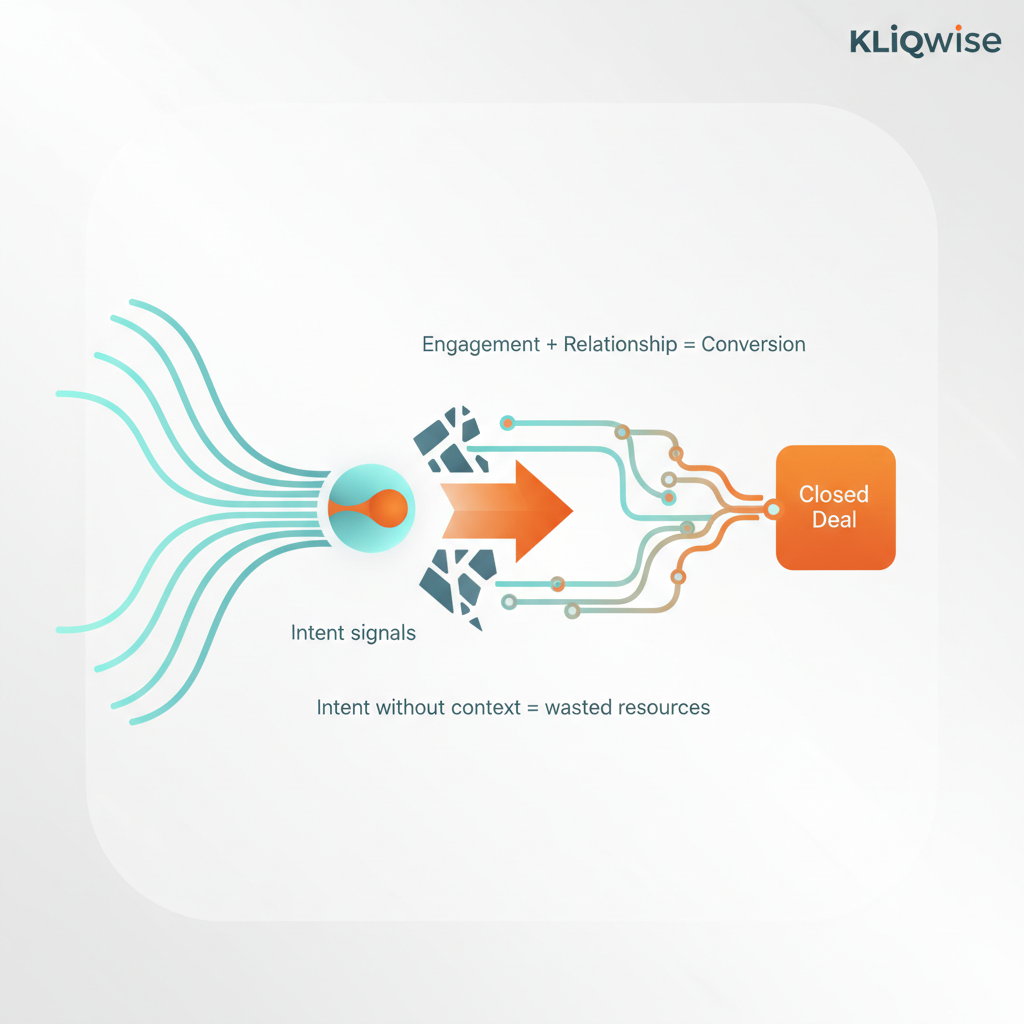
We’ve all been there. A flurry of activity from a target account – website visits, content downloads, even demo requests – triggers the sales team. The lead is “hot,” the opportunity is “urgent,” and the account executive pounces. But then, radio silence. Or worse, a polite brush-off. This isn’t a new story, but it’s a costly one. The core problem? Treating intent signals in isolation.
The Observed Pattern: The “Hot Lead” Mirage
The pattern is consistent. Marketing automation flags a spike in engagement. Sales dials, emails, and crafts personalized outreach. They leverage the downloaded ebook, the viewed pricing page, the “obvious” need. For a brief moment, the deal looks promising. Then, the buyer goes dark, the opportunity stalls, and the AE is left chasing shadows. This happens because the seller is reacting to a signal without understanding the story behind it. They see a symptom, not the underlying condition.
Why This Approach Fails: Ignoring the Internal Playbook
The fundamental flaw is a misunderstanding of the modern SaaS buying journey. Buyers are sophisticated. They self-educate, often well before engaging with a vendor. They involve a complex web of stakeholders – technical leads, financial approvers, legal teams, and end-users. Each has their own priorities, concerns, and evaluation criteria. A single intent signal rarely reflects the complete picture of internal alignment.
Focusing solely on external signals ignores the crucial internal dynamics. Is the buyer building a business case? Are they evaluating multiple vendors? Are they facing internal resistance to change? Without this context, personalization becomes superficial. It’s like sending a get-well card to someone without knowing what they’re sick with. The buyer sees a sales pitch, not a solution to their problem.
What Changes Outcomes: Uncovering the Internal Narrative
To move beyond superficial personalization, we need to shift our focus from observing external intent to understanding the internal narrative. This requires a deeper understanding of the buyer’s challenges, priorities, and internal processes. It’s about asking the right questions, not just reacting to pre-defined signals.
This means equipping sales and marketing with the tools to:
- Identify the key stakeholders: Who is involved in the decision? What are their individual concerns?
- Understand the internal context: What are the buyer’s current initiatives? What are their pain points? What are their goals?
- Map the buyer’s journey: Where are they in the evaluation process? What information do they need to move forward?
By understanding the internal context, sales can tailor their outreach to resonate with the specific needs and concerns of the buying committee. This ensures that the message is relevant, timely, and addresses the actual drivers of the decision. This moves the conversation from the superficial to the strategic.
Conclusion: Beyond the Surface
In the world of B2B SaaS, intent signals are valuable, but they are not the whole story. They are a starting point, not a destination. Truly effective demand generation reduces noise, not adds to it. By focusing on the internal dynamics of the buying process, we can move beyond the illusion of relevance and create meaningful conversations that drive real business outcomes. The key to successful engagement is understanding the buyer’s internal playbook, not just their external signals.