

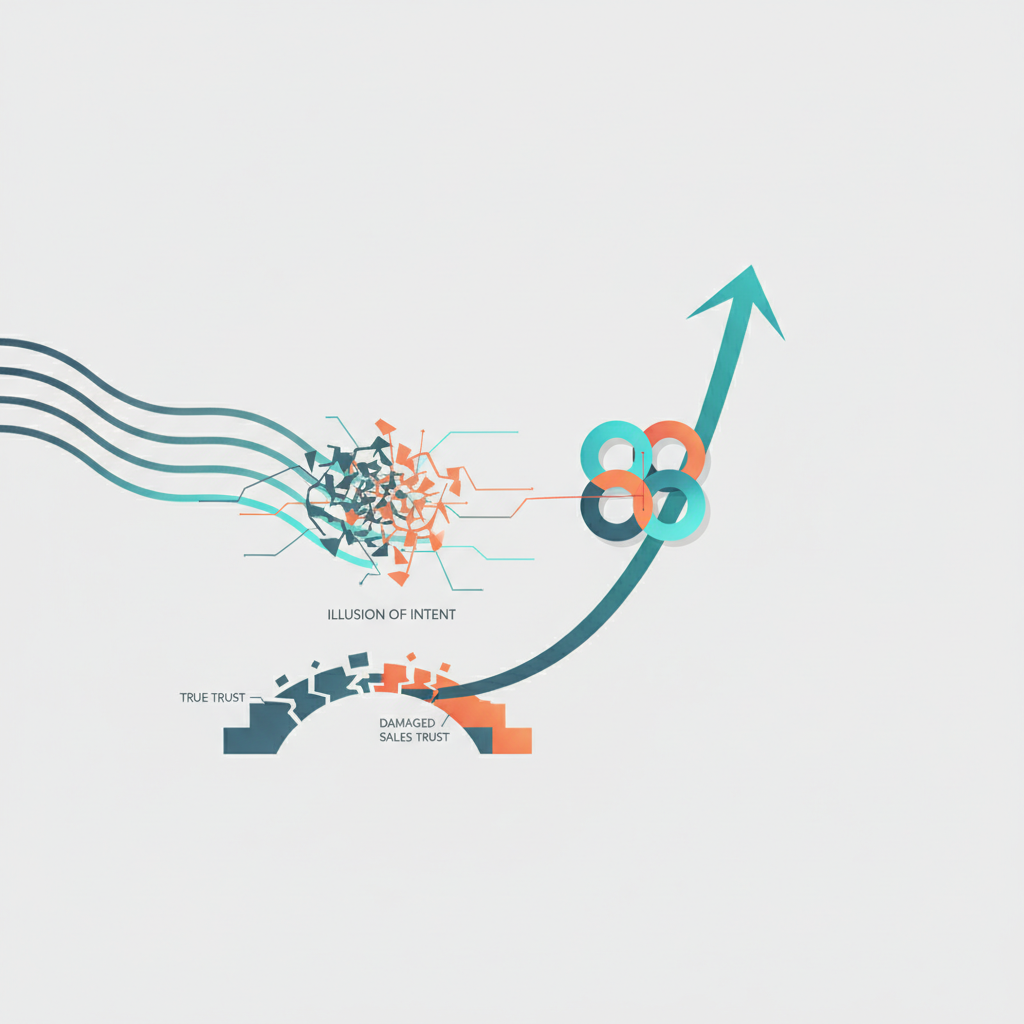
The sales and marketing disconnect. It’s the perennial SaaS problem, right? Marketing throws leads over the wall, sales grumbles about quality, and revenue goals hang precariously in the balance. But what if the core issue isn’t lead volume or lead scoring, but a fundamental misunderstanding of how modern SaaS buyers actually buy? From a product marketing perspective, I see a recurring pattern: the relentless pursuit of “intent signals” without adequate context is actively eroding sales trust and making it harder to close deals.
Myth: Intent Signals Guarantee Sales Readiness
The prevailing myth is that tracking intent – website visits, content downloads, demo requests – magically reveals a buyer’s true readiness to purchase. The assumption is simple: if a prospect engages with your content, they’re closer to a buying decision. This leads to sales teams chasing “hot leads” based on these signals, often with aggressive outreach. But in reality, this approach frequently backfires.
The Contextual Reality: Buyer and Seller Misalignment
Here’s the rub: modern SaaS buyers are problem-aware, not necessarily solution-aware. They’re actively researching, comparing options, and building consensus internally. They’re also exceptionally wary of being sold to. When a sales rep reaches out based solely on a content download, they risk being perceived as intrusive, irrelevant, and out of sync with the buyer’s current stage in the evaluation process. This is especially true when the “intent” is weak or ambiguous.
From the sales perspective, reps are under immense pressure to hit quota. They need to prioritize their time on opportunities with high potential for conversion. Low-context leads – those with minimal demonstrated interest beyond a single interaction – often feel like a waste of time. They erode sales trust in marketing’s ability to deliver qualified leads and create friction within the revenue team.
The Problem-Aware Buyer’s Journey and the Risk of Premature Engagement
Consider the problem-aware buyer. They know they have a pain point, but they’re still defining the problem, exploring potential solutions, and building a case for change within their organization. They’re not ready for a product demo or a pricing discussion. They need education, validation, and a trusted advisor – not a pushy salesperson.
Premature engagement, driven by context-free intent signals, can be detrimental. It can:
- Damage the sales rep’s credibility by appearing uninformed.
- Irritate the buyer, leading them to disengage from the sales process.
- Create internal skepticism about the value of marketing-generated leads.
Building Sales Trust through Contextual Understanding
Instead of relying solely on intent signals, demand generation should focus on providing sales teams with rich contextual data. This includes:
- Understanding the buyer’s internal environment: What are their goals? What are their key challenges? What internal stakeholders are involved?
- Mapping content engagement to the buyer’s journey stage: Are they researching, evaluating, or ready to buy?
- Identifying the buyer’s specific pain points: What problems are they trying to solve?
By providing this level of context, demand generation can help sales reps engage with buyers at the right time, with the right message, and build trust from the outset.
Conclusion: Intent Without Context is Noise
In a world saturated with information, buyers are more discerning than ever. They don’t want to be sold to; they want to be understood. The pursuit of intent signals without adequate context is a gamble that often leads to wasted sales effort, damaged relationships, and missed revenue opportunities. The key to bridging the sales and marketing divide is not more leads, but more relevant leads – leads that are qualified not just by intent, but by a deep understanding of the buyer’s journey, their internal context, and their genuine readiness to engage in a meaningful conversation.